- 10月 13 週一 201415:39
網站重新建構中
- 12月 30 週一 201316:42
陳進藝術文化獎 本校美術系系友林莉酈與研究生榮獲前三名
由國立歷史博物館舉辦之「陳進藝術文化獎」,是由著名的畫家陳進女士,捐出其榮獲行政院文化獎的獎金,加上個人的捐款,成立獎學基金,以獎勵優秀的藝術人才,致力於膠彩畫為主之研創發展,每兩年舉辦一次徵件競賽。
今年第十五屆的陳進藝術文化獎,日前頒獎揭曉,第一名林莉酈、第二名蘇莉雅、第三名陳珮怡。三位都是東海大學美術研究所畢業的校友或是在學的研究生,且三位的指導教授都是詹前裕(現任美術系主任)。
榮獲第一名的林莉酈, 是美術系大學部88級、碩士班98級生,其獲獎作品〈卡爾夫麵包店〉與〈7-11〉表現其多年前之打工場所的孤寂感與疏離感。此外林莉酈的學術論文〈東海氣質:東大學美術系膠彩畫風格之觀察〉也榮獲第二屆「郭雪湖臺灣藝術發展研究獎」,該論文刊登於《史物論壇》第16期,是近五年來得獎最多的系友。
系友林莉酈表示,行之有年的陳進藝術文化獎學金,得主多為在膠彩藝業上勤肯多年或表現傑出者,相信今年參與競逐的創作者皆然。然資質平庸者如我,僥倖得此肯定,除感謝陳進女士和歷史博物館設立此獎,更感念提供了完備的膠彩教育環境的母校東海美術系。
林莉酈更談到,每個時代都有其展現的風格,回顧早期前輩膠彩畫家們的雅緻工麗、到受西方現代主義影響的半抽象厚塗表現、還有現今當代藝術思潮的滲透,膠彩 畫的確隨著時代慢慢改變。因此,這個獎固然是對個人的鼓勵,但我更願意把它視為是對東海美術系在膠彩畫教育上多年累積的深化與轉變的肯定!
新聞來源:東海大學首頁 http://www.thu.edu.tw/web/news/news_detail.php?cid=8&id=452
- 11月 09 週五 201217:27
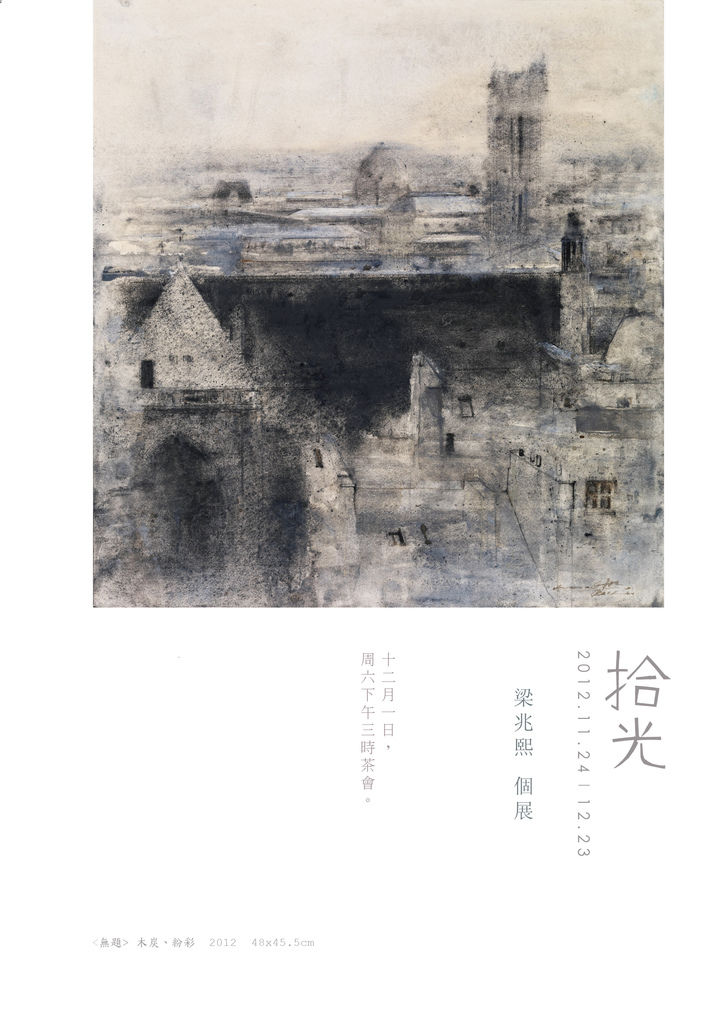
【展訊】拾光─梁兆熙個展
展期:2012.11.24(六)~12.23(日)
茶會:2012.12.01(六)下午三點
地點:小畫廊‧1F
華裔法籍藝術家梁兆熙以風格獨具的炭筆畫受到藝壇與藏家的垂青,從炭筆的緩、急、輕、重、勾、轉等技巧中孕育出類似東方水墨的精神哲思,並融合西方寫實技巧與東方寫意精神,從筆觸和肌理中帶出駿馬躍動的瞬間、花卉的溫柔綻放,以及祛抹於時空褪色裡的恐龍化石和盔甲武士,穿越了傳統素描達到一種形而上的精神,替欣賞者的想像空間擴展了廣袤無垠的深度。
- 4月 29 週日 201217:48
【展訊】「山水尋味」王午版畫個展
「山水尋味」王午版畫個展
Date │ 2012.4.28~8.25
Venue │ 一一畫廊‧高雄市鼓山區西藏街185號 (07-5515535)
一一畫廊‧連結 │ 一一文創 Facebook粉絲團

- 3月 20 週二 201215:30
【展訊】「細感‧直觀」-新生代女畫家三人聯展
- 3月 13 週二 201212:23
開始之前,結束之後 ─ 林莉酈創作自述
- 3月 13 週二 201212:01
林莉酈‧簡歷
林莉酈 Lin Li-Li
1981 出生於台灣
2012 東海大學美術系碩士班三年級
個展
2011《林莉酈創作展》︱東海大學藝術中心,台中
2010《9-9》︱The Gellery,高雄
2010《CLJB特賣會》︱小香蕉藝術x廚房,高雄
聯展
2011《振彩繚繞 - 膠彩新貌展》︱東海大學藝術中心,台中
2010《鮮!新秀展》︱元華藝術空間,台北
2009《小城故事》︱小畫廊,高雄
獲獎
2012《高雄獎》水墨膠彩組入選
2012《第29屆東海美術系師生聯展》研究所膠彩組首獎
2011《 東海大學美術系︱京華麗澤膠彩畫獎學金》
2011《大墩美展》膠彩組優選
2011《新北市美展》膠彩組入選
2011《高雄獎》水墨膠彩組入選
2011《第28屆東海美術系師生聯展》研究所膠彩組首獎
2010《南瀛雙年獎》膠彩組入選
2010《大墩美展》膠彩組第三名
2010《第27屆東海美術系師生聯展研究所》膠彩組第三名


LINKS → 作品欣賞 ‧ 創作自述
- 3月 13 週二 201210:42
【展訊】微小視點─點‧點‧點 ─臺北市立美術館
- 10月 10 週一 201111:56
生活愉悅與真實美景─朴九煥的木刻版畫
◎節錄自 Dr. Sung-hui Lee
當觀看版畫時,我們認為,藝術家創作版畫的長期艱苦過程中,需要絕對專注的頭腦與身體。繪畫作品所創造出來的感覺是非常不同的;尤其是木刻版畫, 會使我們想到肌肉的緊繃感─正進行木板雕刻藝術家的肌肉和藝術家刀片刻畫木板時木板所呈現的抵抗力─我們也許會稱它為切割的感覺。
儘管如此,由朴九煥所創作出來的木刻版畫卻略顯不同,在他的版畫裡,尖銳刀片的感覺被柔和的曲線和色彩所包圍。從木刻版畫中獲得這樣細膩、溫和的感覺是非常不同的經驗,但這並不表示他的木刻印刷的過程比其他藝術家來的溫和、容易。正如評論家所指出的,他的版畫是由單版複刻製成的,也就是只用一塊板,刻出想要的圖像,配上各種顏色,這需要由藝術家逐漸削減表面,直到所有想要的部分被不同的顏色印出來為止;因此,他的方式比其他木刻版畫的方式更耗時、更艱苦。眾多的世界和宇宙誕生然後減少,直到他得到最終想要打印的一道風景。值的注意的是,他的風景版畫看起來如此平靜富饒,卻是源自於如此嚴格的製作程序。
儘管工作費力,他的風景版畫卻總是觸動人心、令人感覺心情愉悅,並不會看到情緒的困擾,或威脅生命的、暴力強制性質的標誌。他的畫作充滿生活的愉悅與積極性,像是南島沿海的村落如此寧靜,樹上春季的繁花盛開著。也許,他版畫裡的風景就是我們現在失去的家,或著,是埋藏在深層歲月裡的內心深處,那已經歷了這個忙碌的現代社會的內心深處。不管它可能是什麼,我們都不要誤解了那宜人的色彩與柔和的曲線,與來自他們的寧靜和平,就如同單純的簡樸或虛榮的裝飾。
來自印度的古老聖經宣揚,人類良知包括三個層次,最上層為「自製食品」,第二層為「自製呼吸」,底層為「自製喜悅」。我們在朴九煥的版畫中所找到的歡愉、樂趣也許是屬於最底層的喜悅。以他的作品「聲音之海」系列為例,這個系列他已經生產了十年,聲音之海不僅是有關海的聲音,也是關於內在聲音的交響樂,源自於所有自然界中的萬物,同時也源自於生命深處波濤的海洋;這正存在我們所體驗的寧靜喜悅的「聲音之海」中。
朴九煥作品中所呈現的聲音,並不像我們日常生活中所慣常聽到的那些噪音,我們必須屏棄習以為常的城市喧囂,重新以閑靜的心靈靜靜體會感受「聲音之海」。當我們進入了平靜的狀態,內心深處那層被遺忘的情感將湧現,取而代之的便是細膩及纖柔的體會。
「聲音之海」系列作品便是引領我們感受生命中的悸動,就像是最原始的聲音一般:當日光劃過海洋、大樹枝葉的顫抖、微風吹過稻草的低語、土地的生命力、叢林的律動等等,看似單純的自然現象,卻皆是一幕幕多樣的風情姿態。朴九煥的作品透過色彩,帶給我們一種聆聽萬物並與大自然共生的體會。在這裡所謂的「聲音」,便是閑靜存在的本質。
朴九煥近期的新作”In Full Bloom”系列,則描述繁花盛開的春天風光,不同於以往充滿色彩與生動的圖像,用另一種角度呈現愉悅與積極樂觀的生活態度。特別的是,在過去一般印象中所見的花鳥風景題材多是以傳統水墨的形式呈現,但在此我們看到了同樣的主題,透過版畫卻創造出另一種新的可能性。
在傳統水墨中的樹枝總是被安排得活潑有生氣,大量的留白與枝葉的配置都被分配得妥當得宜,而盛開的櫻花則是在線條與留白間綻放,更運用了破筆的技法,將柔軟的筆刷繪製出如同使出刀劍般力度的線條。反觀”In Full Bloom”作品,藝術家雖然使用了刻刀刻畫,呈現出的卻是柔和的畫面,其已然剛柔並濟。當然,”In Full Bloom”並無效仿傳統水墨畫的意圖,而是特別描繪佈置了枝葉的陰影,如同剪影一般的佈局,並有層次地重複在畫面空間中出現,這些在過去常見的以水墨畫表現的花鳥畫中都是非常罕見的。
在今天現代化的社會,無刻充斥著環境破壞與氣候變遷的危機,而朴九煥的作品卻帶領我們進入一種忘憂且極樂的世界。如同馬丁‧海德格爾所言,在困頓的時代,詩人的使命是帶領人們返回純真的家園,而朴九煥就像是詩人一般,引領我們透過他的畫作回到了自然樸實且充滿生命泉源的家園。同時,我們更期許的,即是藉由他畫中的色彩與聆聽到的聲音,重拾愉悅與積極的生活態度。
Reference
"Landscape of Positivity and Delights Life- Park Gu Hwan Woodcut Art 1991-2011”, Sung-hui Lee (2011), Gu-hwan Park, p.6-9
Reviewed by Sung-hui Lee (Dr. Philosophy)
When viewing block prints, we think of the artists who created them, and the long painstaking process, which requires absolute concentration of the mind and body. It is a feeling quite different from what is created by paintings. Woodblock prints, in particular, make us think of the tension of muscles – the muscles of the artist who engraved the woodblocks, and the resistance of the wood that is being carved off by the artist’s blades. We might call it the sensation of cutting.
However, the woodblock prints by Gu-hwan Park are slightly different. In his prints, the sensation of sharp blades is surrounded by gentle curves and soft colors. It is a very unusual experience to get such delicate and gentle feelings from woodblock prints. But that doesn’t mean his process of woodblock printing is gentler, and thereby easier, than others. As one critic has pointed out, his prints are made with the Reduction Printing Method, which uses only one block to print the desired image in multiple colors. That requires the artist to cut away the surface little by little, until all desired parts are printed in different desired colors. So his is a method that requires longer and more painstaking stages than most other woodblock print methods. The numerous worlds and universes are born and then reduced, until he gets one final print of a landscape. It is remarkable that his landscape prints – which look so peaceful and bountiful – are the result of such a rigorous process.
In spite of the arduous work, his prints of landscapes are always heart-touchingly cheerful, and pleasant. We see no emotional disturbances, or signs of the violent force of nature that threatens life. His prints are permeated with the positivity and delightfulness of life – on trees full of spring blossoms, and in villages so peaceful along the coasts of southern islands. Perhaps, the landscape in his prints is our home that is now lost, or the deepest part of our heart that has been buried under the thick layers of time we have lived through in this busy modern society. Whatever it might be, we are not to mistake the pleasant colors and gentle curves – and the serene peace that comes from them – as unsophisticated simplicity, or decorations of vanity.
An old scripture from India preaches that the human conscience consists of three levels: the top level called ‘the self made of food,’ the second level called ‘the self made of breathing,’ and the bottom level called ‘the self made of delights.’ The joy and pleasure we find in Park’s prints are perhaps what belongs to the bottom level of delights. Take his Sea of Sound series, for example. In this series that he has been producing for ten years, the sea of sound is more than just about the sound of the ocean; it is about the symphony of inner sounds that come from all that exists in nature, while at the same time about the ocean of waves that come from the depths of life. It is in this sea of sound that we experience serene delight.
The sounds in Park’s prints are not the same as the numerous alarms that we have grown accustomed to in urbanized life. To hear the Sea of Sound, we have to regain the peripheral senses that we had to give up for the sake of becoming assimilated into the city of noise. We regain our peripheral senses when we find tranquility in ourselves. When we are tranquil, our disabled sensibility comes alive, and we can hear all the delicate frequencies coming from the depths of all that is living. Sea of Sound invites us to the waves of life, the origin of all sounds; the waves of sunbeams shattering over the ocean, the quivering boughs, whispers of grass, waves of the soil, dances of the trees, the gesture of one landscape beckoning to others, and the trembling of all simple shapes. It invites us to experience synesthesia with all things of nature when they tremble between sounds and colors. This is the phenomenology, and the ontology of sounds that we find in the state of tranquility.
The landscapes of these diverse sounds are in fact diverse variations of the wave. The hidden wave that permeates them all is none other than the positivity and the delights of life. The positivity and delights of life shine most brilliantly in the spring blossoms that we see in his In Full Bloom, a print that will be on display during the exhibition. Nothing can demonstrate the positivity and delights of life better than fully-opened blossoms.
However, his In Full Bloom shows a different kind of formative approach. Unlike his other works, where the prints are full of vivid colors and figures, In Full Bloom shows a landscape that reminds us of the cherry blossoms that we often see in traditional black and white ink paintings. A new world of formation is unfolding in this print, where the tree branches are dividing the space with a vivacious energy that we find in traditional black and white ink paintings, creating empty spaces that are just as bountiful as the lines that divide them. Flowers are in full bloom between the lines and empty spaces, and between the colors black and white.
While traditional ink paintings use the Split Technique that allows a soft brush to wield the power of a sword, the sharp blades of the artist embrace the softness of the brush. What we see here, in his prints, is the new formative space that opens up when the sword-like brush is matched with the brush-like sword. Of course, In Full Bloom is not intended to be an imitation of a traditional ink painting. He has shadowy silhouettes behind the tree branches, creating the depths and echoes in space, which is rare to find in traditional landscapes. This is what makes us anticipate a new possibility of expanded depths in the spaces created by the artist.
An encounter with Gu-hwan Park’s prints is a blissful experience at a time when the home and nature is being destroyed or lost, and the changed climate is threatening our lives. Martin Heidegger declared that the mission of a poet is to come home, and that, for him, writing a poem is his first home-coming. Home is the origin of life. In this sense, Gu-hwan Park is a poet who is taking us home, the land where the delights of life flow. We all wish to be engraved in his prints, and tremble to the sounds and colors in them, so that we can reclaim the positivity and delights of life that we have lost.
Reference
“Landscape of Positivity and Delights Life- Park Gu Hwan Woodcut Art 1991-2011”, Sung-hui Lee (2011), Gu-hwan Park, p.6-9
 藝文評論‧Criticism (2)